

Segmenting clients, counterparties, and other risk factors is crucial for optimizing Anti-Money Laundering (AML) prevention and ensuring regulatory compliance. At Pirani, we have enhanced our segmentation module within AML+ with a new DBSCAN model, enabling more robust, automated, and technically aligned analysis.
In this blog, we explain what DBSCAN is, how segmentation works in AML+, and how it can benefit your organization.
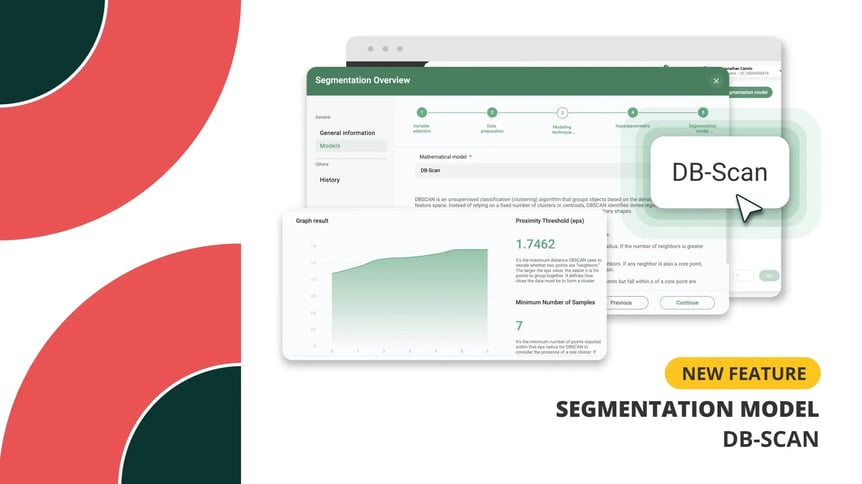
What is the DBSCAN Model?
DBSCAN (Density-Based Spatial Clustering of Applications with Noise) is a clustering algorithm that identifies data groups based on density. Unlike other methods, DBSCAN allows for:
- Automatic segment identification: determines the number of clusters without needing to define them in advance.
- Number of records per segment: each group shows how many records it contains.
- Percentage distribution: understand the weight of each segment within the total dataset.
- Noise detection: atypical records are counted and reported separately.
This approach makes segmentation more precise, flexible, and reliable.
Benefits and Value for the Organization
Implementing DBSCAN in Pirani AML+ provides key technical and strategic advantages:
- Automation and efficiency: reduces manual intervention and speeds up data analysis.
- Higher accuracy and robustness: clearly identifies valid segments and noise records, ensuring reliable results.
- Complete data visibility: allows you to see the proportion of records in each segment and detect hidden patterns.
- Adaptability to different data types: works with variables such as clients, counterparties, channels, products, and jurisdictions.
- Better-informed decisions: anticipates risks and prevents suspicious activities.
- Optimized risk management: identifies high-risk groups and outliers that could affect overall analysis.
- Increased operational efficiency: automates critical processes and frees time for strategic analysis.
- Enhanced traceability and control: results are auditable and reportable, meeting regulatory requirements.
- Improved AML prevention: monitors client and counterparty behavior in a structured and reliable way.
How Segmentation Works in AML+
Segmentation in AML+ allows you to group, understand, monitor, and track the behavior and transactions of your risk factors, including clients, counterparties, channels, jurisdictions, and products.
With this functionality, your organization can:
- Prevent money laundering, terrorism financing, and proliferation of weapons of mass destruction.
- Analyze client and counterparty behavior in a structured manner.
- Manage data securely thanks to dedicated and protected infrastructure.
The module allows you to choose from different modeling techniques, including K-Means, Two-Step, and the new DBSCAN, and configure hyperparameters to achieve the most precise results based on your organization’s needs.
Conclusion
The incorporation of the DBSCAN model in Pirani AML+ transforms how organizations segment and analyze their data, offering a more automated, precise, and technically aligned process. This strengthens AML prevention and risk management, enabling organizations to make strategic decisions based on reliable, up-to-date information.Are you already using the segmentation section?
Available in the AML + system
Try it now!
Don’t have the Enterprise plan? Schedule a demo with our sales team!

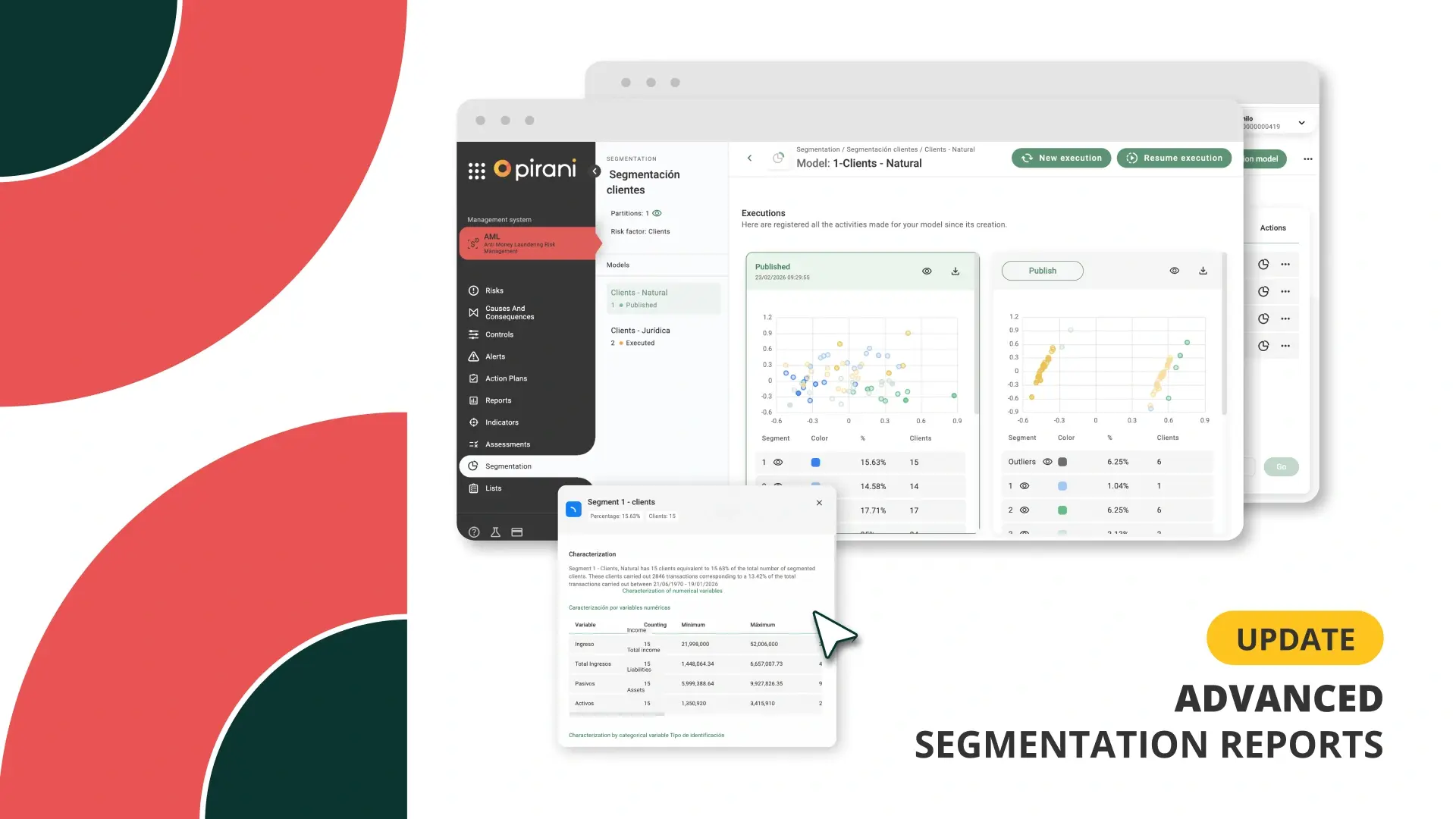
AML Segmentation: Governance & Traceability

Create segmentation models for your organization

Anti-Money Laundering Solutions: How to Make the Correct Segmentation for Money Laundering
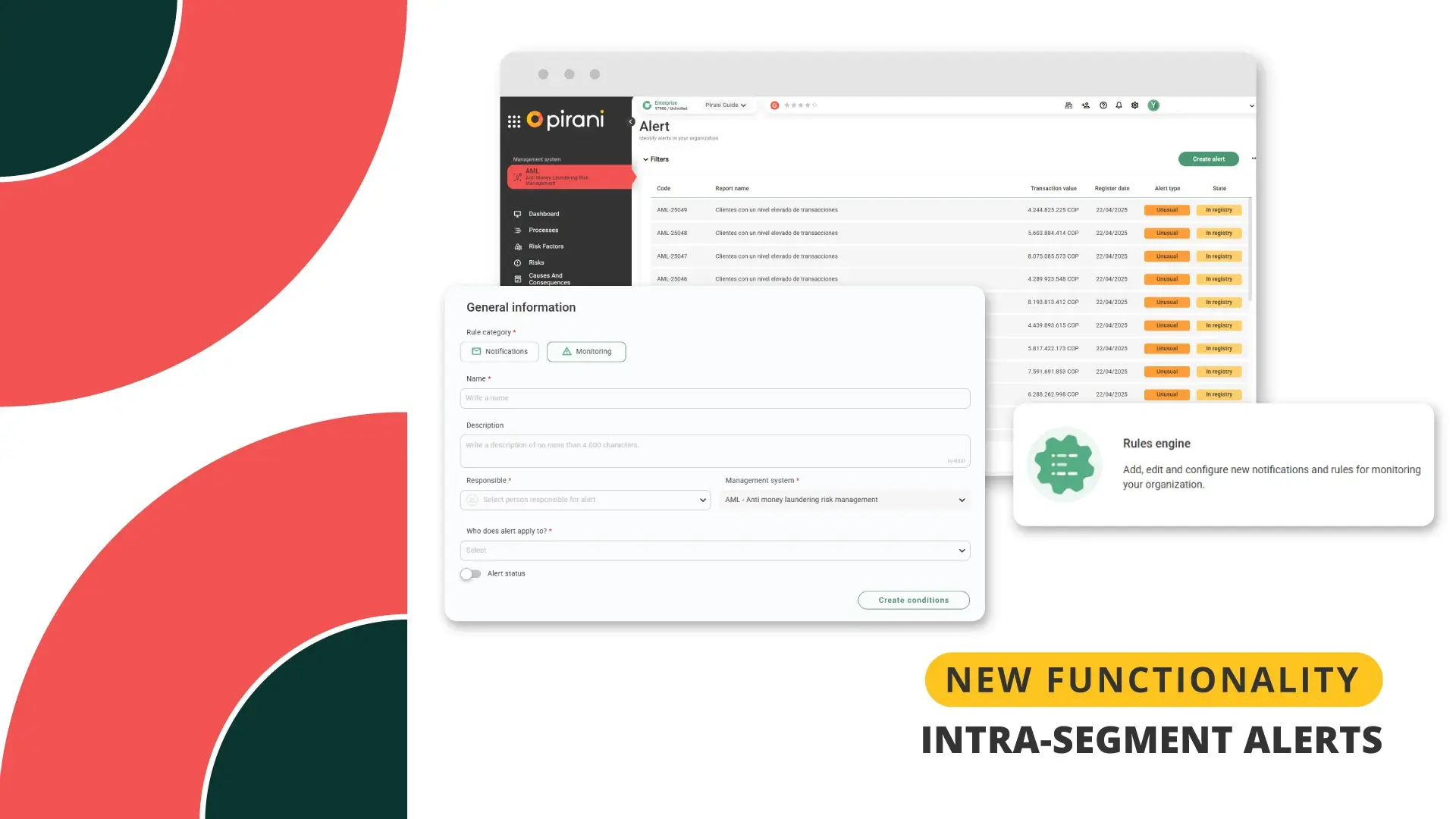
Detects atypical behaviors with intrasegment alerts
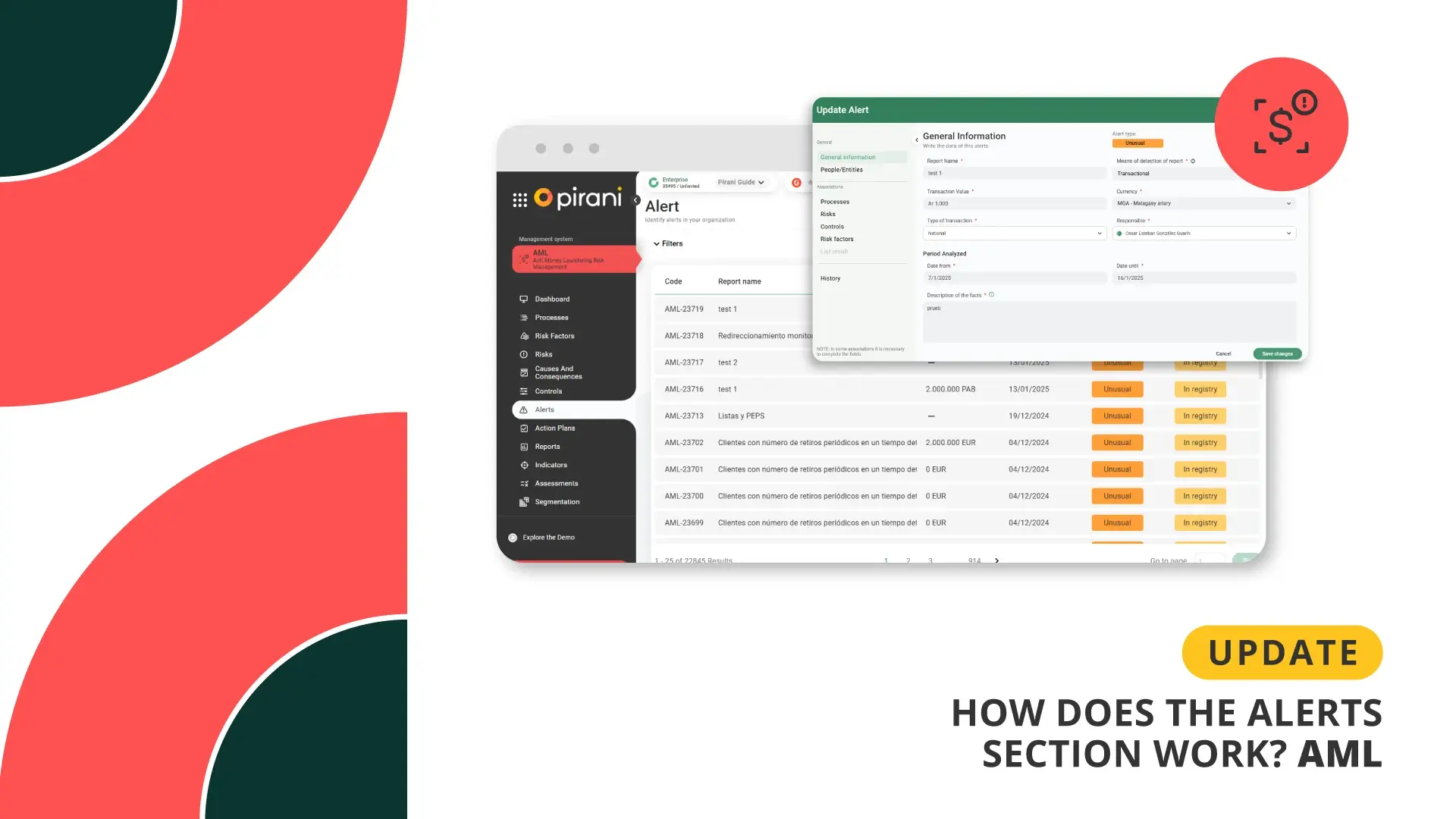
How do the Unusual Alerts work in AML?

No Comments Yet
Let us know what you think